Grow in Grace Embroidery Design Review
As a designer who spends half my life staring at digitized files and the other half wrestling with thread tension, I have learned to be skeptical of any graphic that promises both elegance and ease. When I first pulled up Grow in Grace Png, Ai, Eps,svg, Dxf, Jpg, I wasn’t just looking at a pretty picture; I was evaluating its viability for real-world production. The market is flooded with generic faith-based graphics, so the question isn’t whether it looks nice on a screen—it is whether it survives the transition from vector to fabric without losing its soul.
The First Impression: Mood and Layout
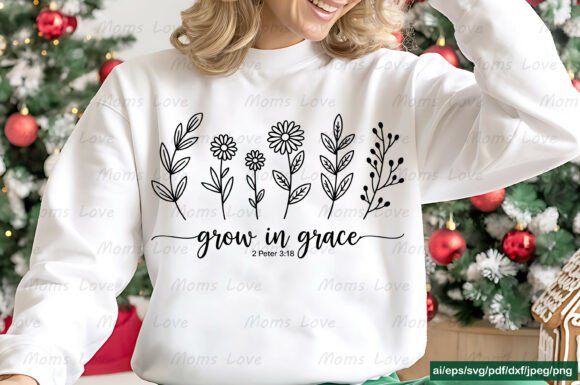
The immediate visual pull of this design comes from its balance between typography and illustration. The phrase “Grow In Grace – 2 Peter 3 18” is rendered in flowing script, which immediately signals a softer, more personal aesthetic compared to blocky, bold fonts often used in athletic or streetwear embroidery. Paired with delicate hand-drawn floral elements, the composition feels organic rather than rigid. This is not a design meant to shout; it is meant to whisper.
From a layout perspective, the negative space is handled well. For an embroiderer, empty space is as important as stitched area because it dictates where the eye rests and how the hoop framing will work. The floral accents frame the text naturally, creating a focal point that guides the viewer’s attention through the scripture reference. It feels intentional, not cluttered. This kind of thoughtful spacing is crucial when you are trying to create a handmade product that feels premium rather than mass-produced.
Real-World Application: Where This Design Shines
I recently considered using this file for a batch of custom embroidered tote bags intended for a small boutique client. The goal was to create a personalized gift item that felt spiritual but modern. Here is how I see Grow in Grace Png, Ai, Eps,svg, Dxf, Jpg performing in specific scenarios:
- Tote Bags and Canvas Totes: This is perhaps the strongest use case. The canvas texture provides enough stability for the delicate lines, and the neutral background allows the thread colors to pop. It works beautifully as a center-chest placement or even a larger back print for a statement piece.
- Baby Clothes and Nursery Decor: The gentle script and floral motifs align perfectly with nursery themes. Whether stitched onto a muslin blanket, a bib, or a onesie, the design conveys warmth. However, on such small items, the scale must be managed carefully to ensure the text remains legible.
- Aprons and Kitchen Towels: For the home cook who values faith and aesthetics, this makes an excellent holiday embroidery gift. Linen or cotton twill aprons provide a sturdy surface that complements the graceful curves of the design.
- Sweatshirt Embroidery: While fleece can be tricky, this design’s relatively low density (assuming standard digitizing) should sit nicely on the chest of a crewneck sweatshirt. It adds a touch of sophistication to casual wear, elevating it from basic apparel to a custom apparel statement.
Technical Considerations and Stitch Clarity
When evaluating a machine embroidery design, I always think about stitch density and detail retention. The flowing script in Grow in Grace Png, Ai, Eps,svg, Dxf, Jpg likely relies heavily on satin stitches for the lettering outlines and possibly fill stitches for the floral leaves. If the digitization is clean, the transitions between the flower petals and the letters should be smooth.
However, there are risks. Script fonts can sometimes suffer from "thread breaks" if the underlay isn’t secure, especially on stretchy fabrics like jersey knits. Additionally, the fine details of the hand-drawn flowers need to be large enough to be distinguished by the naked eye after stitching. If the design is scaled down too much for a tiny patch or a hat front, those delicate lines might merge into a blurry blob. Always inspect the small details before committing to a production run.
Another critical factor is the choice of thread colors. The original digital preview shows black elements, but in embroidery, color is everything. A stark black-on-white contrast is classic, but a deep navy or forest green on a cream background might offer a more subtle, luxurious feel. The versatility of having multiple file formats means you can experiment with these colorways in your mockups before cutting fabric.
Where to Exercise Caution
No design is universal, and this one has specific limitations based on its aesthetic nature:
- Small Hoop Sizes: Avoid placing this on extremely small areas, such as the cuff of a sleeve or a very small logo spot on a cap. The intricate floral details require breathing room to be appreciated.
- Textured Fabrics: While linen and canvas are great, highly textured bouclé or heavy tweed might obscure the fine lines of the script. The needle may struggle to penetrate dense weaves cleanly, leading to puckering.
- Curved Surfaces: Embroidering this on a curved surface like a baseball cap requires precise hooping techniques. If the fabric distorts during stitching, the symmetry of the floral elements could be lost, making the design look lopsided.
- Dense Stitch Areas: If the design includes large fill areas for the flowers, ensure your machine can handle the thickness. On thin fabrics, excessive density can cause the material to pucker significantly, ruining the drape of the final garment.
Business Value and Customer Appeal
For Etsy sellers and small shop owners, the appeal of this design lies in its emotional resonance. Faith-based products are a massive niche, but they compete on authenticity. A well-executed embroidery project using Grow in Grace Png, Ai, Eps,svg, Dxf, Jpg signals quality. It suggests that the seller cares about the details, which builds customer trust.
The design also lends itself well to branding. Imagine a boutique brand that uses this motif as a recurring element across their packaging, tags, and products. It creates a cohesive visual identity. Furthermore, because it is a digital embroidery file available in multiple formats, it offers flexibility for different marketing needs. You can use the PNG for social media previews, the SVG for web graphics, and the DST or PES for actual production.
Practical Designer Notes for Success
Before you upload this file to your machine, follow these steps to ensure a professional finish:
- Test on Scrap Fabric: Never go straight to your final product. Run a test stitch on the exact fabric type you plan to use. Check for puckering, thread tension issues, and color accuracy.
- Check Stabilizer Usage: Delicate designs often require stable backing. A cut-away stabilizer is usually best for woven fabrics like linen, while a tear-away might suffice for sturdier cottons. Using the wrong stabilizer can lead to distortion.
- Review in Black and White: Convert your digital preview to grayscale. This helps you assess the contrast and balance of the design without being distracted by color. If the shapes don’t read clearly in black and white, they won’t stitch clearly either.
- Confirm Licensing: As a commercial embroidery user, you must verify the license terms. Does the purchase allow you to sell finished physical goods? Are there limits on the number of units? Clear licensing protects your business from legal issues.
- Inspect Small Details: Zoom in on the digital file. Are the thinnest lines of the script thick enough to hold a satin stitch? If they are too fine, consider adding a slight underlay or adjusting the stitch length in your software to prevent breakage.
Final Verdict
Grow in Grace Png, Ai, Eps,svg, Dxf, Jpg is a strong contender for designers looking to add meaningful, high-quality pieces to their catalog. Its elegant script and natural floral motifs make it versatile enough for apparel, home decor, and gifts. While it requires careful attention to fabric choice and stitch settings, the end result is a sophisticated embroidery project that resonates emotionally with customers. For anyone in the crafts and graphics industry aiming to produce heartfelt, professional merchandise, this design asset is worth the investment—provided you take the time to execute it with precision.